How to Write a Pop Song: Structure, Hook, Lyrics
How to write a pop song: pick one idea, build the chorus around a short hook, write verses with detail, use verse, chorus, bridge structure, then demo it.
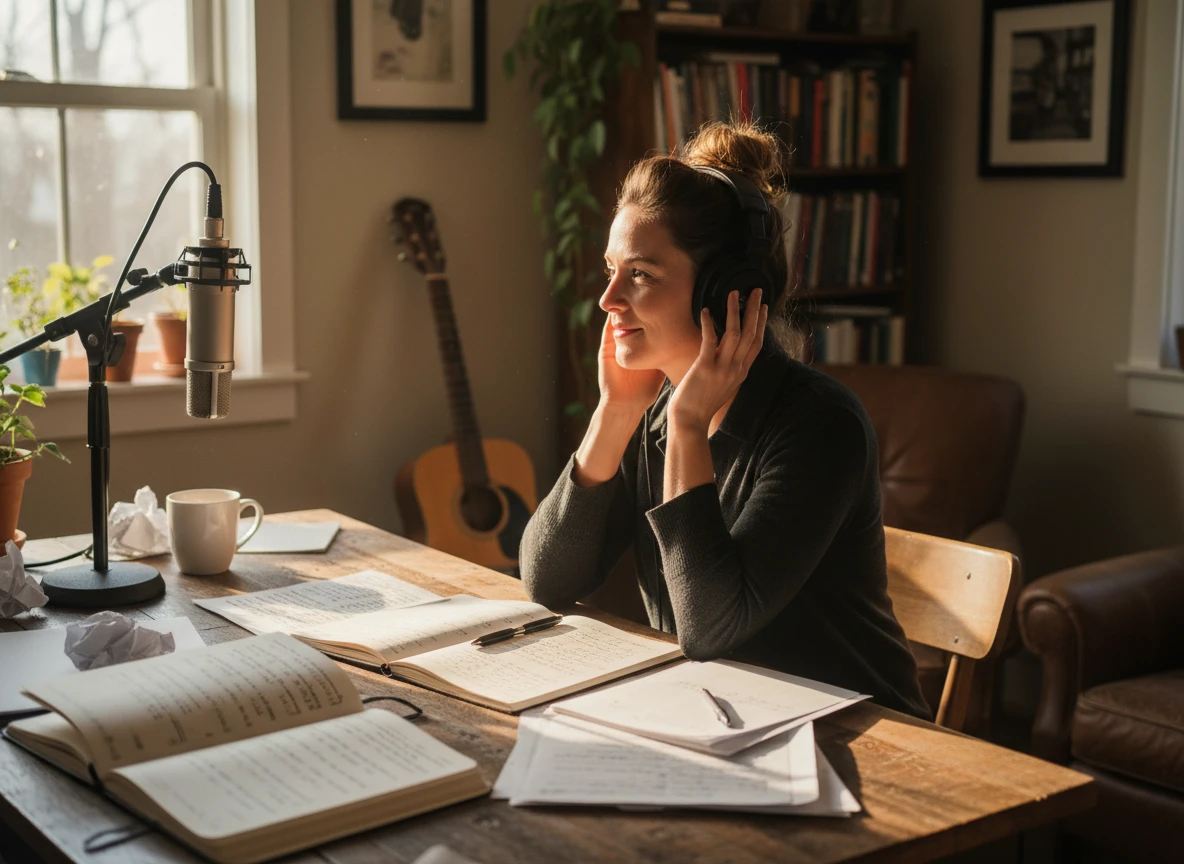
To write a pop song, start with one clear idea and a title, build the chorus around a short hook that repeats the title, write verses full of small concrete details, and arrange the parts in a familiar order like verse, chorus, verse, chorus, bridge, chorus. Pop songs are short and direct, so every section has one job. The eight steps below take you from a blank page to a demo you can play for someone, with example lines you can borrow and a checklist for the rewrite.
Step 1: Pick one idea and a title
Most weak pop songs try to say three things. Strong ones say one thing in several ways. Before you write any lyrics, finish this sentence: "This song is about..."
Keep it to a single situation and a single feeling, for example "I still keep your hoodie, even though you've moved on." Then turn that into a title: a short phrase someone could sing, like "Your Hoodie" or "Still Wearing It".
A useful warm-up is to write ten possible titles in five minutes, then circle the one that makes you want to know the story behind it. The title will usually become the hook, so it pays to choose it early.
Step 2: Learn the parts of a pop song
Pop music uses a small set of sections, and listeners already know what each one is for.
- Intro. A few bars that set the mood. Keep it short.
- Verse. Tells the story and sets the scene. The melody repeats from verse to verse, but the words change.
- Pre-chorus. A short lift that builds tension right before the chorus.
- Chorus. The emotional center and the part people remember. Same words every time, with the title in it.
- Post-chorus. An optional chant, hook or instrumental riff right after the chorus.
- Bridge. Appears once, usually after the second chorus, and changes something: the chords, the melody or the point of view.
- Outro. The ending, often a last chorus that fades or a stripped-down hook.
The most common pop song structure puts these in this order:
- Verse 1
- Pre-chorus
- Chorus
- Verse 2
- Pre-chorus
- Chorus
- Bridge
- Final chorus (often bigger, sometimes repeated)
Strip out the pre-choruses and you get the classic verse, chorus, verse, chorus, bridge, chorus shape. Many pop songs run around three minutes and reach the first chorus well inside the first minute, so don't let the intro and first verse drag.
Chorus vs bridge
People often confuse the two because both are "the other part" that isn't a verse. The chorus repeats several times with the same words and carries the title. The bridge happens once, brings something new, and makes the final chorus feel earned. If your bridge could be swapped for the chorus without anyone noticing, it isn't doing its job.
Step 3: Write the hook first
The hook is the shortest, catchiest piece of the song, the part that gets stuck in someone's head. In pop it is usually the title, sung on a simple rhythm and repeated.
- Put it at the start or the end of the chorus, and repeat it two to four times.
- Keep it short, often two to five words.
- Give it a melody that stands out, like a jump up to a higher note or a rhythm that differs from the verse.
Here is an example chorus built around one hook:
Still wearing it, still wearing it
Your hoodie on my bedroom floor
Still wearing it, still wearing it
Like you never walked out the door
Hooks are not only lyrics. A synth riff, a guitar line or a wordless "oh-oh" chant after the chorus can all be hooks. Many pop songs stack two or three of them.
Step 4: Verses show, the chorus tells
The verse and the chorus do different work, and keeping them apart is one of the quickest ways to make a song feel professional.
- Verses show. Use specific details: a place, an object, a time of day, something someone said. "Your coffee cup still on the counter" says more than "I miss you."
- Verse 2 moves forward. Don't repeat verse 1 in new words. Move the story on, show another side or jump ahead in time.
- The pre-chorus builds. Shorter lines, rising energy and a sense that something is about to happen.
- The chorus tells. Say the big feeling plainly, in simple words, with the title.
An example first verse for the song above:
Saturday, the rain against the glass
Your playlist's still the first thing that I play
I tell my friends that I'm over it
Then I pull the sleeves down anyway
Step 5: Make the lines singable
A line that reads well on paper can still trip up a singer. Three things make lyrics easy to sing.
Rhyme. Perfect rhymes like "night" and "light" sound clean. Near rhymes like "home" and "alone" sound more natural and give you more choices. Pop uses both. Common rhyme schemes are AABB (lines 1 and 2 rhyme, then 3 and 4), ABAB (lines 1 and 3, then 2 and 4) and XAXA, where only lines 2 and 4 rhyme. XAXA is the easiest place to start.
Syllables. Lines that sit in the same spot in each verse should have a similar number of syllables, so they fit the same melody. If verse 1 line 1 has eight syllables and verse 2 line 1 has fourteen, the singer will have to cram.
Stress. Put the stressed syllable of important words on the strong beats. Say the line out loud at normal speed. If you naturally say "to-NIGHT" but the melody lands on "TO-night", rewrite the line or move the melody.
A quick test: sing every line on a single note while tapping the beat. Anything that feels awkward spoken in rhythm will feel worse sung.
Step 6: Find the melody and chords
You don't need music theory to write a pop melody, but a few habits help.
- Use a simple loop. A lot of pop sits on four chords that repeat. In the key of C, try C, G, A minor, F (numbered I, V, vi, IV), then try the same chords in a different order for the chorus.
- Lift the chorus. Sing the chorus higher than the verse, with longer notes. The verse can stay lower and closer to speech.
- Hum before you write. Loop the chords and hum melodies into a voice memo for a few minutes. The one you still remember the next day is usually the keeper.
- Pick a comfortable tempo. Plenty of pop sits somewhere between about 90 and 130 BPM. Slower suits ballads, faster suits dance pop.
- Write over a backing track. If you don't play an instrument, make a chord bed to hum over with the AI instrumental generator: describe the style, keep it simple, and loop it while you write.
Step 7: Hear a quick demo with AI
Hearing your words sung, even roughly, tells you more than rereading them. You can make a demo on this site in a few minutes, with no instruments.
- Stuck on lyrics? The AI lyrics generator writes a full draft with verse and chorus tags from your idea, in the genre and language you pick. Treat it as a starting point and rewrite it in your own voice.
- Open the AI lyrics to song page, or the AI music generator, and switch to Custom lyrics.
- Paste your lyrics into Your lyrics. Tags like
[Verse],[Pre-Chorus],[Chorus]and[Bridge]on their own lines help shape the song. - In Style, describe the sound, for example "upbeat synth pop, bright and catchy, female vocals, 118 bpm". Add a Title.
- Press Create song. Each run gives you two versions with different melodies, so listen for which one sells the hook best, then Download MP3.
The voices are original AI voices, and words like "female vocals" or a tempo in the style steer the result without guaranteeing it. If you have an idea but no words at all, the AI songwriter does both steps in one place: Write lyrics first, edit any line, then create the song. Your first song each day is free with no sign-up. If you plan to release a song made with AI help, read our Terms of Service first.
Step 8: Rewrite with a checklist
First drafts are for getting it down. The song gets good in the rewrite. Go through these questions with your demo playing.
- Can someone hum the chorus after hearing it once?
- Is the title in the chorus, ideally in the first or last line?
- Does verse 2 tell us something verse 1 didn't?
- Can every line be sung at full speed without cramming?
- Does the bridge change the chords, the melody or the point of view?
- Do you reach the first chorus quickly?
- Is there one line you would cut if you had to? Cut it.
Then put the song away for a day. Coming back with fresh ears is the most reliable editing trick there is.
FAQ
How long should a pop song be?
Many pop songs run about two and a half to three and a half minutes. There is no rule, but getting to the chorus early and ending soon after the last one keeps it tight.
What is the most common pop song structure?
Verse, chorus, verse, chorus, bridge, chorus, often with a short pre-chorus before each chorus. It is common because it repeats the hook enough to stick while the bridge adds a surprise.
What is the difference between a chorus and a bridge?
The chorus repeats with the same words and carries the title. The bridge appears once, usually after the second chorus, and changes the chords, melody or perspective before the final chorus.
Should I write the lyrics or the melody first?
Either works. Many writers start with the title and a hummed chorus melody together, then write verses to fit. If you write lyrics first, read them aloud in rhythm to make sure they can be sung.
How do I write a catchy hook?
Keep it short, repeat it, and give it a melody or rhythm that differs from the verse. Building the hook on the song's title makes it easy to remember.
Can I write a pop song with AI?
Yes, as a helper. AI can draft lyrics and turn them into a sung demo quickly. Your own edits, details and melody choices are what make the song yours.