What Is a Beat in Music? Both Meanings Explained
A beat in music is the steady pulse you tap your foot to. In hip hop, a beat also means the instrumental an artist raps or sings over. Here is how both work.
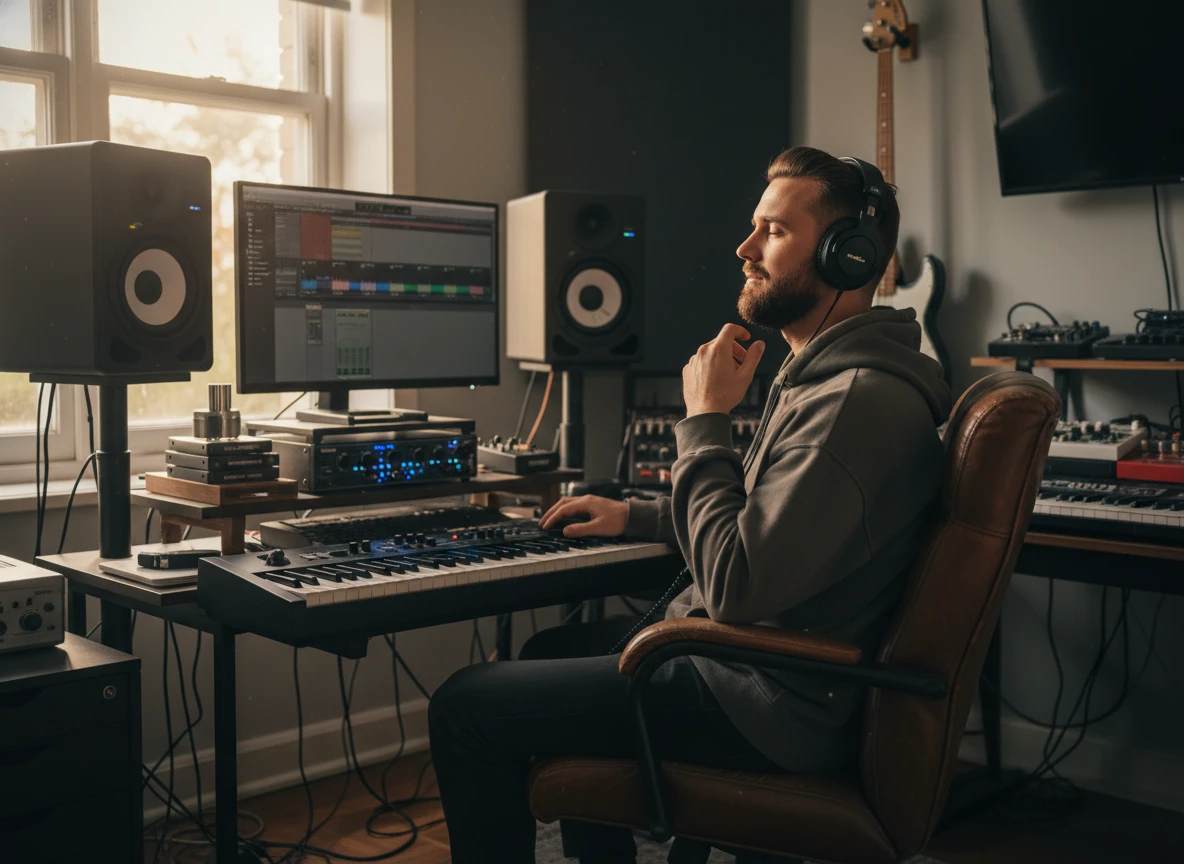
A beat in music is the even, repeating pulse that runs underneath a song: the thing you nod along to without thinking. Count "1, 2, 3, 4" along with almost any pop song and each number lands on a beat. The word has a second meaning too. In hip hop, R&B and pop, "a beat" is the instrumental track a rapper or singer performs over, usually drums and bass plus a loop. This guide explains both meanings, how the beat relates to tempo, rhythm and time signatures, and how to make a beat of your own.
The beat as a pulse
Think of the beat as a clock ticking behind the music. The notes on top can be long, short, fast or tangled, but the pulse stays even. That is why a crowd can clap together to a song they have never heard: they lock onto the beat, not the melody.
Beats are not all equal. In most music they fall into a pattern of stronger and weaker pulses.
- Downbeat. The first beat of each bar, the "1". It usually feels like the place where the pattern starts again.
- Backbeat. In rock, pop, hip hop and R&B, the snare or clap lands on beats 2 and 4. That push on the "weak" beats gives the music its drive.
- Offbeat. The space halfway between two beats, the "and" when you count "1 and 2 and". Hi-hats and guitar strums often live here.
Beat vs tempo vs rhythm
These words are used loosely in conversation, but each one means something specific.
- Beat is the pulse itself.
- Tempo is how fast the beats go, measured in beats per minute (BPM). At 60 BPM you get one beat per second. At 120 BPM you get two.
- Rhythm is the pattern of sounds and silences laid over the beat. The beat can stay perfectly steady while the rhythm on top gets busy, sparse or syncopated.
- Meter is how beats are grouped into bars, which is what a time signature tells you.
- Groove is the overall feel that comes out of all of the above, including small timing details like swing.
A simple test: tap your foot steadily while you clap the melody of a song. Your foot is the beat. Your hands are the rhythm.
Beats and time signatures
A time signature has two numbers. The top one says how many beats are in a bar. The bottom one says which note value counts as one beat.
- 4/4 has four beats per bar, and a quarter note gets one beat. Most pop, rock, hip hop and dance music is in 4/4, which is why it is also called common time.
- 3/4 has three beats per bar, counted "1, 2, 3". It gives the swaying feel of a waltz.
- 6/8 has six eighth notes per bar, usually felt as two big beats, each split into three. Many ballads and folk songs use it.
The same tempo can also be felt in different ways. Trap is often made around 140 BPM with the snare on beat 3 instead of 2 and 4, so it feels like 70. That is called a half-time feel, and it explains why two people can tap the same song and get numbers that differ by a factor of two.
How to find the beat of a song
Finding the beat takes a little practice, but the method is simple.
- Listen for the steadiest sound in the song, usually the kick drum, the hi-hat or a strummed chord, and tap along with it.
- Count "1, 2, 3, 4" with your taps. Listen for where the pattern seems to restart, often on a big drum hit or a chord change. That is beat 1.
- Check yourself on a section with a clear snare. In most popular music it lands on 2 and 4.
To put a number on it, open the BPM tapper and press Tap here (or any key) on each beat. After at least four taps it shows the Average tempo, and the Stability label tells you whether your taps were steady. Switch on Metronome to hear the tempo you tapped and check it by ear. If you would rather analyze a file, the key and BPM finder reads the tempo from an upload and also shows the half and double values, because 70 and 140 can both be correct.
"A beat" in hip hop: the instrumental
When a rapper says "send me a beat", they don't mean a pulse. They mean an instrumental: a track with drums, bass and usually a melody, chord loop or sample, with no vocals on it. The person who makes it is a producer or beatmaker.
A beat becomes a song once someone writes and records over it, adds a hook and shapes it into verses and choruses. Producers often sell or lease beats online, and buyers browse them by genre, tempo, key and mood.
What does "type beat" mean?
A "type beat" is an instrumental labeled with a well known artist's name to describe its style, so people looking for that sound can find it. It is a search label, not a sign that the artist was involved. If you make type beats, keep the sound your own and don't copy melodies or samples from the artist's records.
What is a beat made of?
Most beats are built from a small set of parts. Genres differ mainly in how these parts are placed and how fast they move.
- Kick drum. The low thump that anchors the pulse.
- Snare or clap. The crack on the backbeat, beats 2 and 4 in most styles, or beat 3 in half-time trap.
- Hi-hats. Steady eighth or sixteenth notes that keep time between the bigger hits. Trap adds fast rolls.
- Percussion. Shakers, rim shots, congas and claves that add color.
- Bass or 808. The tuned low end, often following the kick pattern.
- Melody or sample. A chord loop, a riff or a short sample that gives the beat its mood.
A few common patterns, as rough guides rather than rules:
- House puts the kick on every beat (four on the floor) and an open hi-hat on each offbeat, usually around 120 to 128 BPM.
- Boom bap uses swung, punchy drums with the snare on 2 and 4, often somewhere around 85 to 95 BPM.
- Trap pairs sliding 808 bass with rolling hi-hats and a half-time snare, often made at 130 to 150 BPM.
- Reggaeton is built on the dembow rhythm, a repeating kick and snare figure, usually around 90 to 100 BPM.
How to make a beat
You can start making beats today without buying any gear. Here are two ways to do it on this site.
Build one step by step
The random beat generator is a step sequencer that runs in your browser, with no sign-in and no credits.
- Choose a Genre, such as Trap, Boom bap, House, Lo-fi, Drill, Reggaeton or Afrobeats, and press Play.
- Press Randomize to re-roll every row you haven't locked. Each genre keeps its basic skeleton, like the four on the floor kick in house, and varies the rest.
- Click squares in the grid to add or remove hits on the Kick, Hi-hat, Perc and other rows. Set Tap to to Set velocity for softer and louder hits, or Set roll for hi-hat rolls.
- Adjust BPM, Swing and Key until it feels right, then press Download WAV.
The sequencer makes drums and one bass line only, with no melody or vocals. When you want a full track in the same style, Make it a full track with AI sends the genre, tempo and key to the song generator. It follows them most of the time, but not to the exact beat.
Describe it in words
On the AI beat maker, type what you hear in your head, for example "dusty boom bap beat with a jazzy piano loop and vinyl crackle, laid back", and press Create instrumental. Each run gives you two versions to compare and download as MP3. The rap beat maker does the same with presets tuned for rapping over.
Once you have a beat, the AI music generator can turn an idea into a full song with vocals, if you want to hear where it could go.
FAQ
What is a beat in music in simple terms?
A beat is the steady pulse of a song, the regular tick you tap your foot to. In hip hop, a beat also means the instrumental that an artist raps or sings over.
How many beats are in a bar?
That depends on the time signature. In 4/4, the most common one, there are four beats per bar. In 3/4 there are three, and 6/8 is usually felt as two.
What is the difference between beat and rhythm?
The beat is the even pulse. Rhythm is the pattern of notes and rests on top of it. A song keeps one steady beat while its rhythms change from line to line.
Is a beat the same as an instrumental?
In hip hop and pop, yes, people use them as the same thing. Strictly, "instrumental" means any version without vocals, while "beat" usually means a producer's drum-led track made to be rapped or sung over.
What BPM is a typical beat?
It depends on the genre. Hip hop often sits between about 80 and 100 BPM, house around 120 to 128, and trap is usually made at 130 to 150 with a half-time feel, so it can sound like 65 to 75.
What does "on the beat" mean?
It means a sound lands exactly on one of the pulses rather than between them. "Off the beat" or "on the offbeat" means it lands in the spaces between.